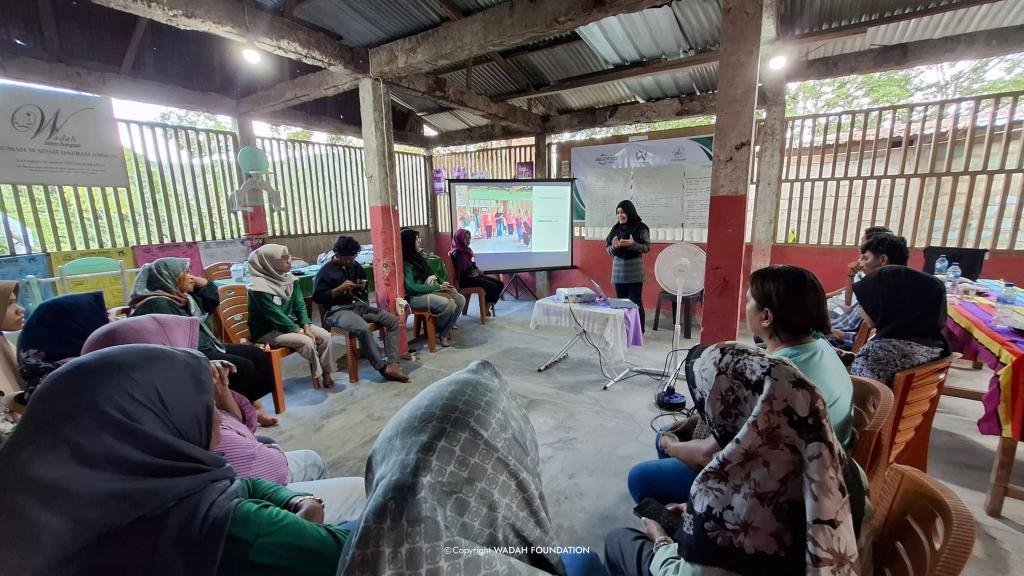
The atmosphere at the Group Leadership and Management Training for Dasawisma Coordinators
In Rinjani Village, Ambon, people hold a simple belief: true independence never comes from above, but grows from the ground up — from one home to another, from one mother to the next, from small conversations on front porches that slowly blossom into a movement. Together with the Samaluku Hiti Nusa (SHN) Foundation, the Wadah Foundation has patiently nurtured this belief, and today it has truly taken root in Rinjani.
In this village, the Titian Harapan Rinjani Women’s School and the Titian Harapan Youth Forum (FP2TH) are weaving a dream that is both ambitious and grounded: to make Rinjani a living example — not merely a model on paper, but a village that can genuinely inspire other communities across Ambon City. To realize such a dream, everyone understands that it must begin with the most fundamental thing: preparing the people.
More Than Just Training
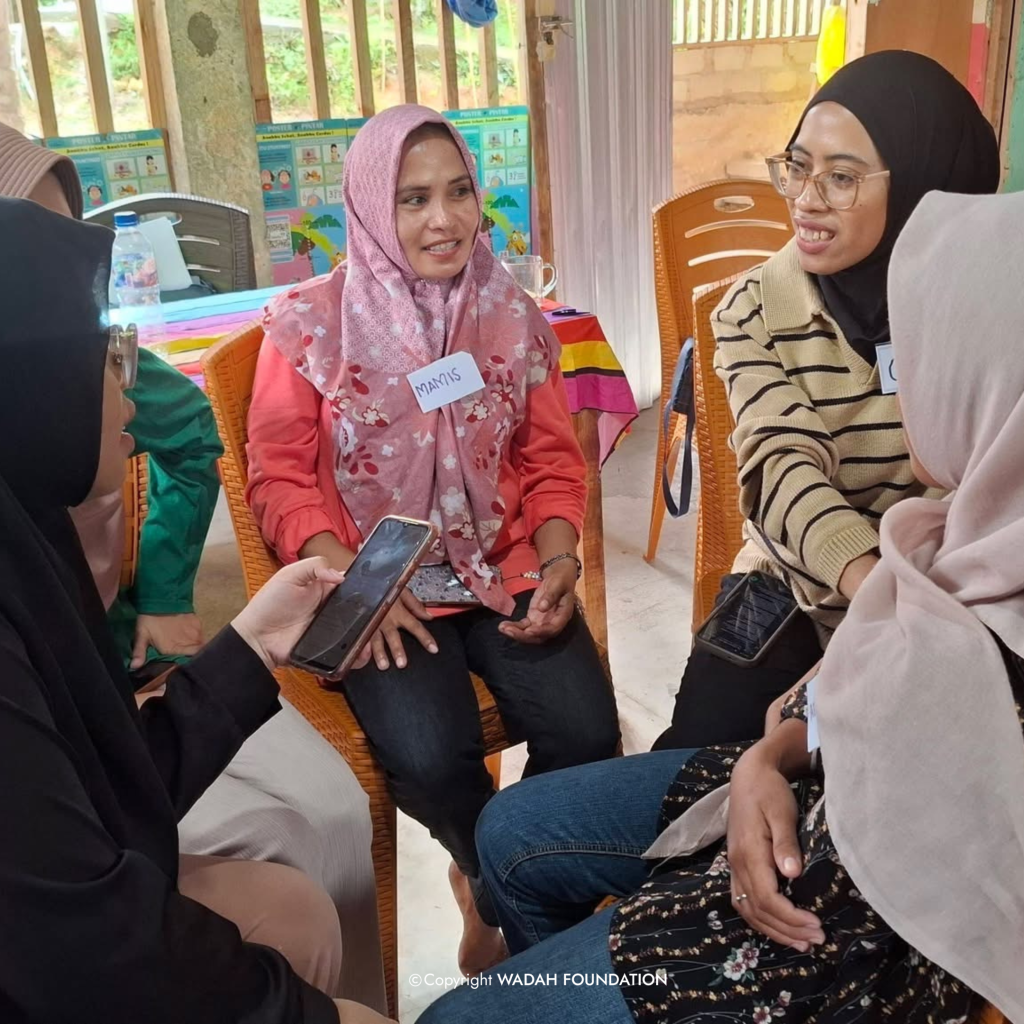
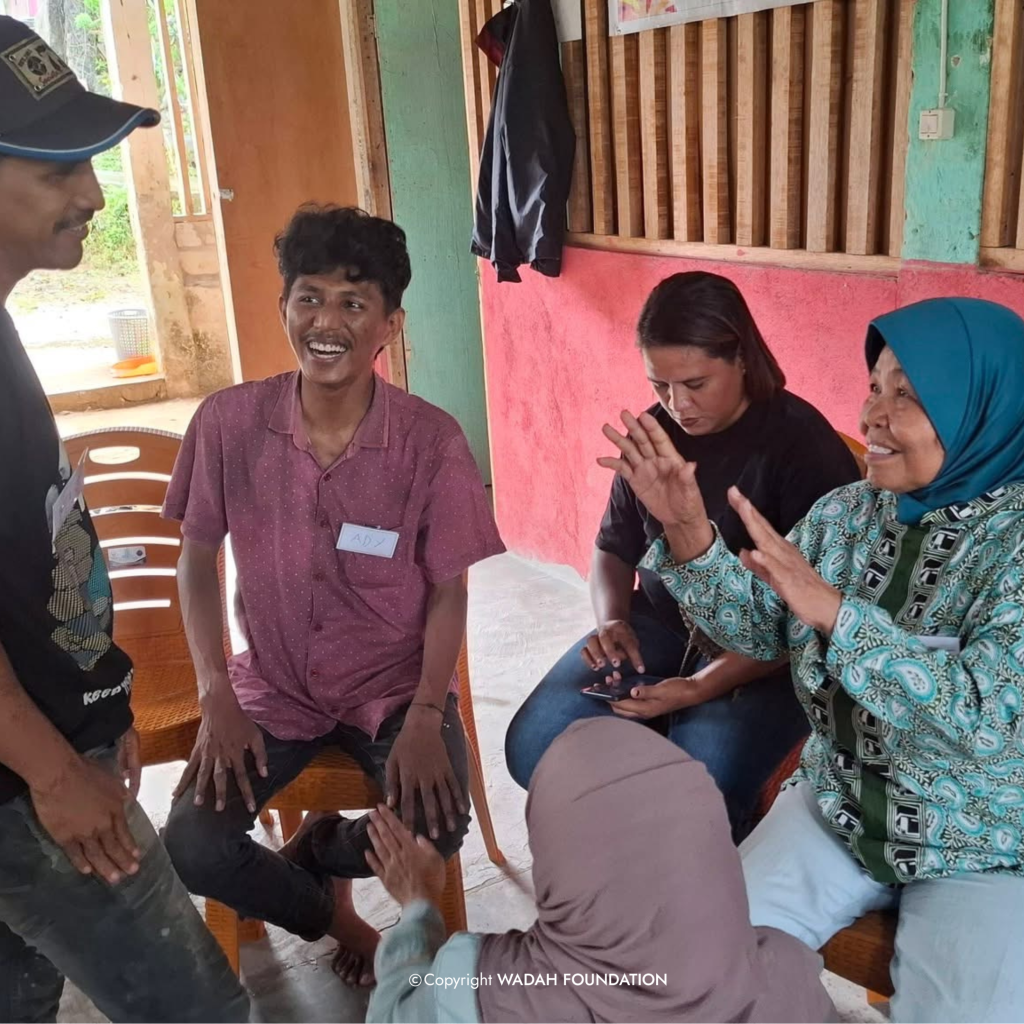
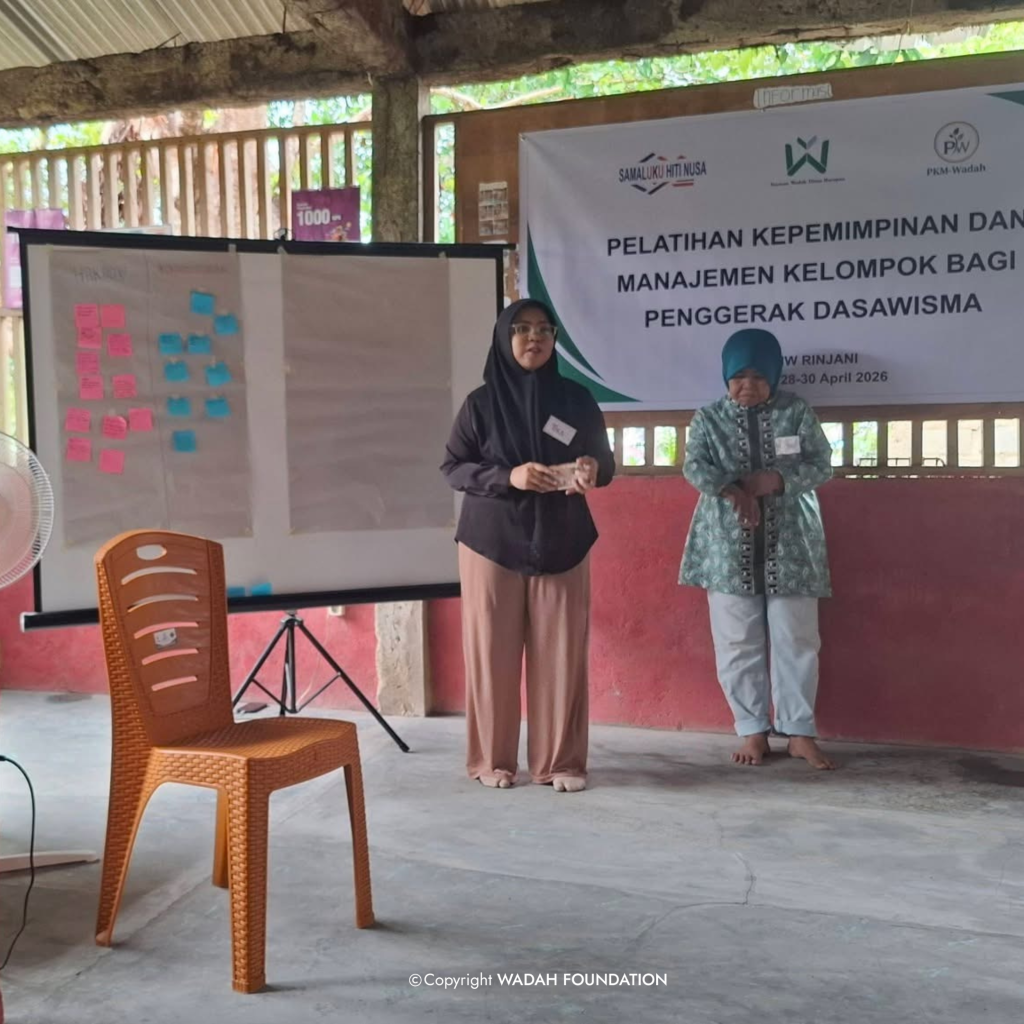
Discussion activities
Through the Wadah Community Center (PKMW) in Rinjani, a three-day learning program was held from 28 to 30 April 2026. Titled Leadership and Group Management Training, the program was designed for Dasawisma activists. Yet everyone who attended understood that this activity was more than just training. It was an invitation to believe in their own capacity to lead change.
The learning space quickly filled with enthusiasm. Village youth arrived eager to learn, while mothers — long regarded as the backbone of their families and the most dedicated grassroots activists — sat side by side, ready to grow together. The training was intentionally designed not to overwhelm participants with theory, but to create space for reflection: How far have we come, and where do we want to go? The sessions were facilitated directly by SHN leader Zakiyah Samal, affectionately known as Cak Kiky, whose engaging and approachable style encouraged participation rather than intimidation.
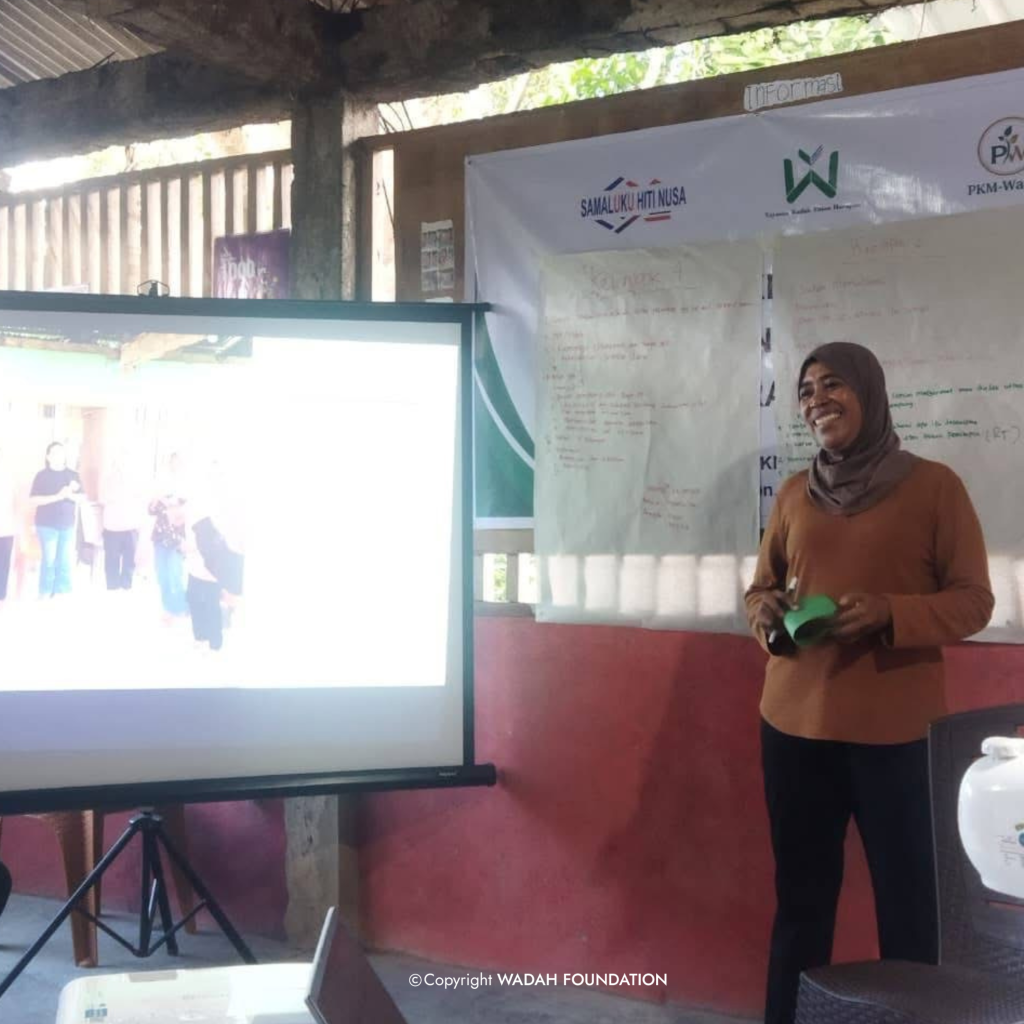
Cak Kiky as resource person
Beginning with Dasawisma
Why Dasawisma? Because it exists within the smallest unit of society, where the pulse of change is most deeply felt. Through these small groups, residents learn to recognize their own potential and become more aware of the challenges surrounding them — challenges that are often experienced daily, yet rarely voiced openly.
This is where leadership is truly formed: not the kind that commands from positions of power, but the kind that has the courage to step forward with confidence, empathy, and the ability to navigate change independently.
There Are No Shortcuts
Still, developing strong human resources is never an overnight process. Cha Kiky did not hide this reality from the participants. “Building superior human resources is not easy,” she said, “but it requires a long process — years of consistency and continuous effort.” Her words were not meant to discourage, but to remind participants that meaningful and lasting change always demands perseverance.
It is here that Wadah’s commitment to SHN finds its true meaning. They did not come as temporary guests who would soon leave. Instead, they chose to stay — to accompany and nurture the growth of a local organizational ecosystem born from within the community itself: PKMW Rinjani, the Titian Harapan Women’s School, and FP2TH.
Within this ecosystem, everyone is encouraged to set aside personal ego, learn to collaborate, align their steps, and transform hidden potential into concrete actions that improve everyday life — moving steadily toward a more empowered and dignified society.
The Lantern of Independence Will Continue to Shine
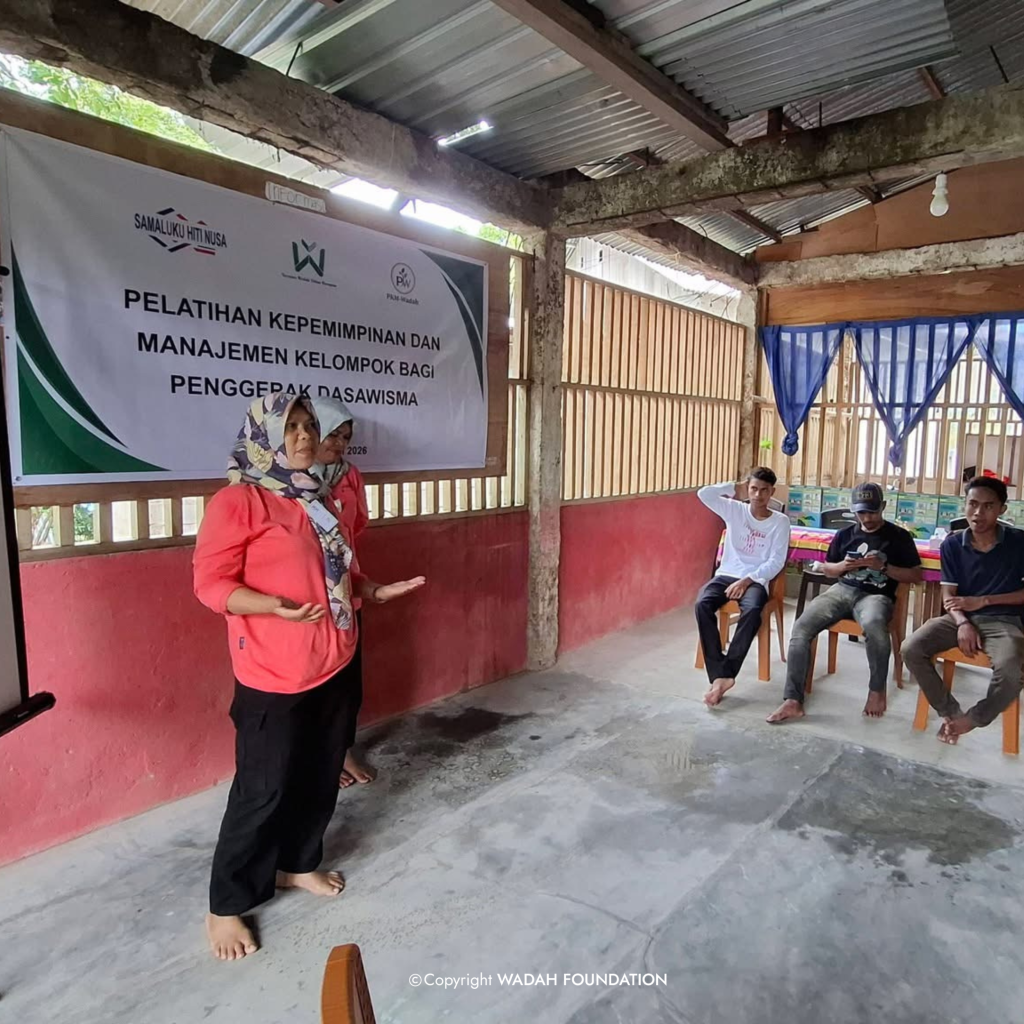
Training participants
Today, that hope rests on the shoulders of the mothers and young people who completed the training. It is not an unrealistic hope, but a grounded and reasonable one: that from this three-day learning space, resilient, empathetic, and responsive agents of change will emerge — individuals ready to adapt to the challenges and dynamics around them. Through vibrant and united Dasawisma communities, they are expected to become driving forces for family well-being, ensuring that the changes initiated in these small spaces continue to help children learn, families stay healthy, and households grow economically stronger.
Hopefully, after this training, the light of independence in Rinjani Village will shine even brighter — spreading from one household to another and inspiring a deeper willingness to support one another. May Rinjani stand as a simple yet powerful reminder that lasting change does not come from a handful of people working alone. It grows when countless hearts choose to care, to act, and to uplift one another.
Author: Ovie Vieira
Editor: Zul Herman