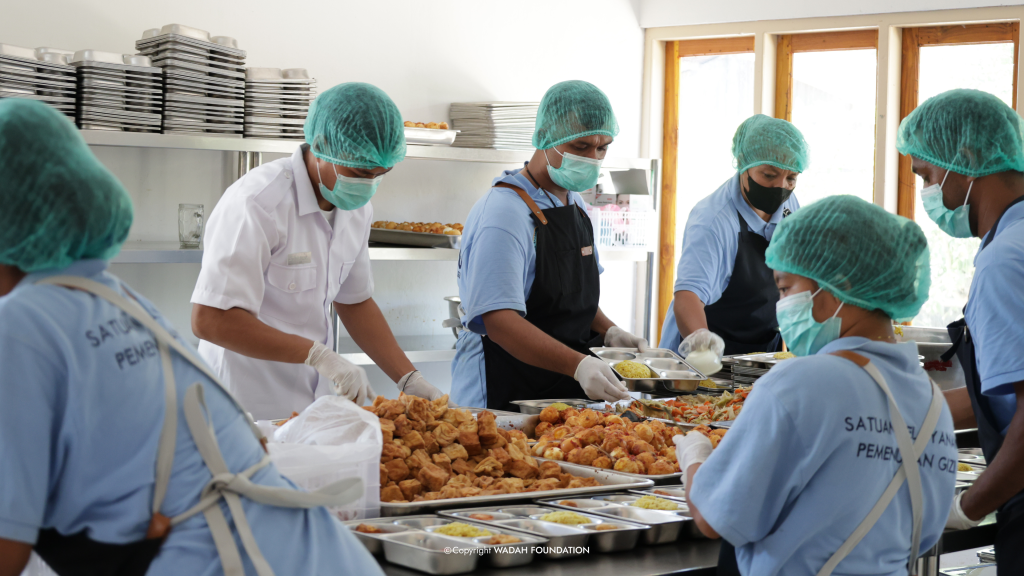
Knaha Moris Nutrition kitchen volunteers are preparing meals
In Manleten Village, East Tasifeto District, Belu Regency, there is a kitchen that is never quiet — and it is more than just a kitchen. Its name is Knaha Moris Nutrition Kitchen. Long before dawn breaks, its lights are already on. People move in a calm rhythm: chopping, cooking, and dividing meals into the portions that have been carefully measured. Even before the schoolchildren open their eyes, nutritious meals are already waiting for them.
A few years ago, Atambua faced challenges that were anything but simple. Job opportunities were scarce. Illiteracy was still widespread. Farmers worked hard, yet the road to market remained closed to them. It was in such conditions that Yayasan Wadah came to Atambua. It arrived not with grand promises, but with the patience to walk the process from the ground up. The farmers were accompanied through training in demonstration plots (demplot) and the management of organic fertilizer. This was not a one-time training, but consistent, faithful accompaniment — rooted in a single conviction: that the right knowledge of farming, when applied to the right soil, would one day bear the harvest the community had hoped for.
Time bore witness to that conviction
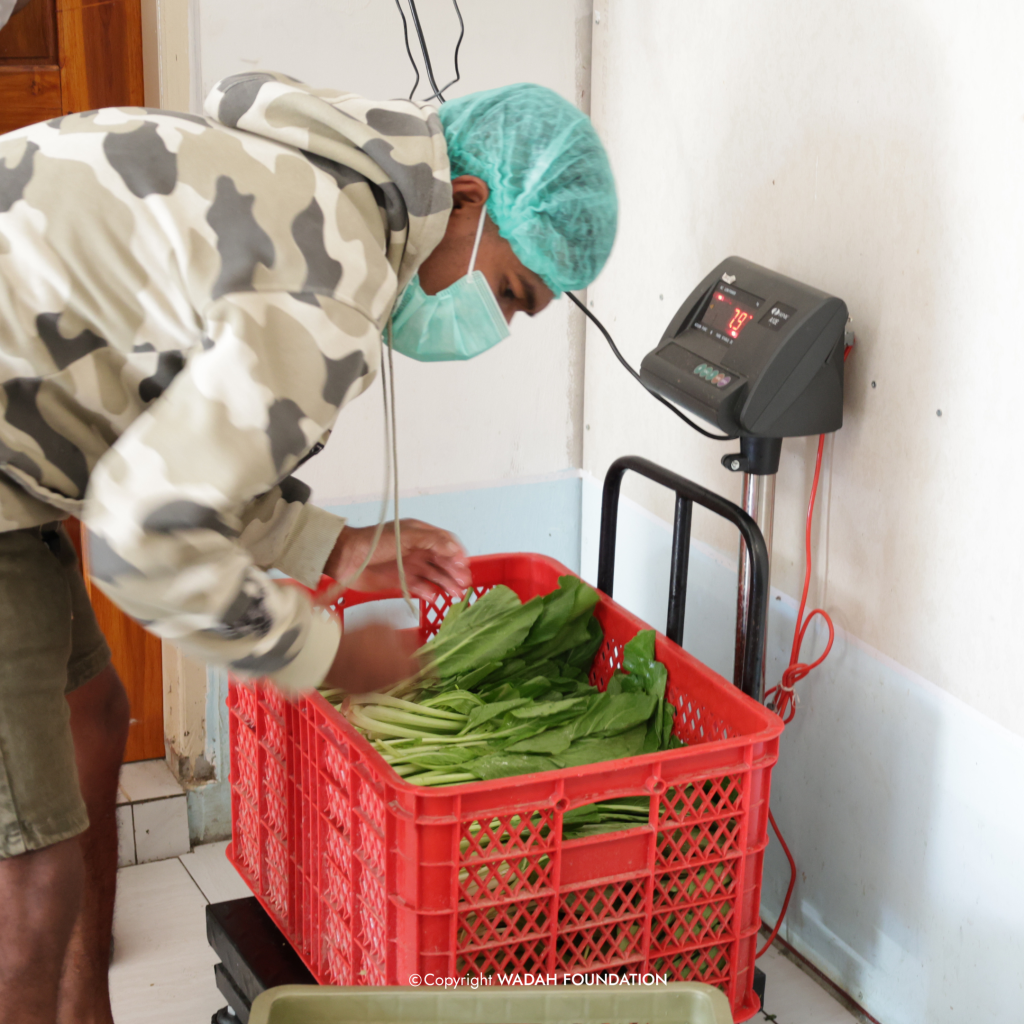
Farmers’ harvests become supplies for the nutrition kitchen
When Knaha Moris Nutrition Kitchen began to operate, its impact turned out to be far more than the provision of meals. The kitchen opened its doors to workers regardless of their educational background — from primary and secondary school graduates to those who had never learned to read, who too were welcomed and given a place to contribute. Farmers who had once been students in the training are now suppliers. Their harvests flow into the cooperative, and from the cooperative into the kitchen. The Village Government, through its village-owned enterprise (BUMDes), has also taken part — supplying ingredients such as eggs through the very same channel.
The wheels of the economy turn not because a single force drives them, but because many hands move them together.
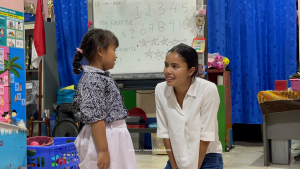
What is most striking is not the kitchen’s production figures, nor the number of schools it serves. What is most striking is what happens behind the walls of the kitchen itself. A woman volunteer who, until recently, could not read, has slowly found the courage to learn. She has enrolled at the Ernama Saraswati Timor Community Learning Center (PKBM), a non-formal educational institution that opens its doors to anyone who has never had the chance to sit at a school desk.
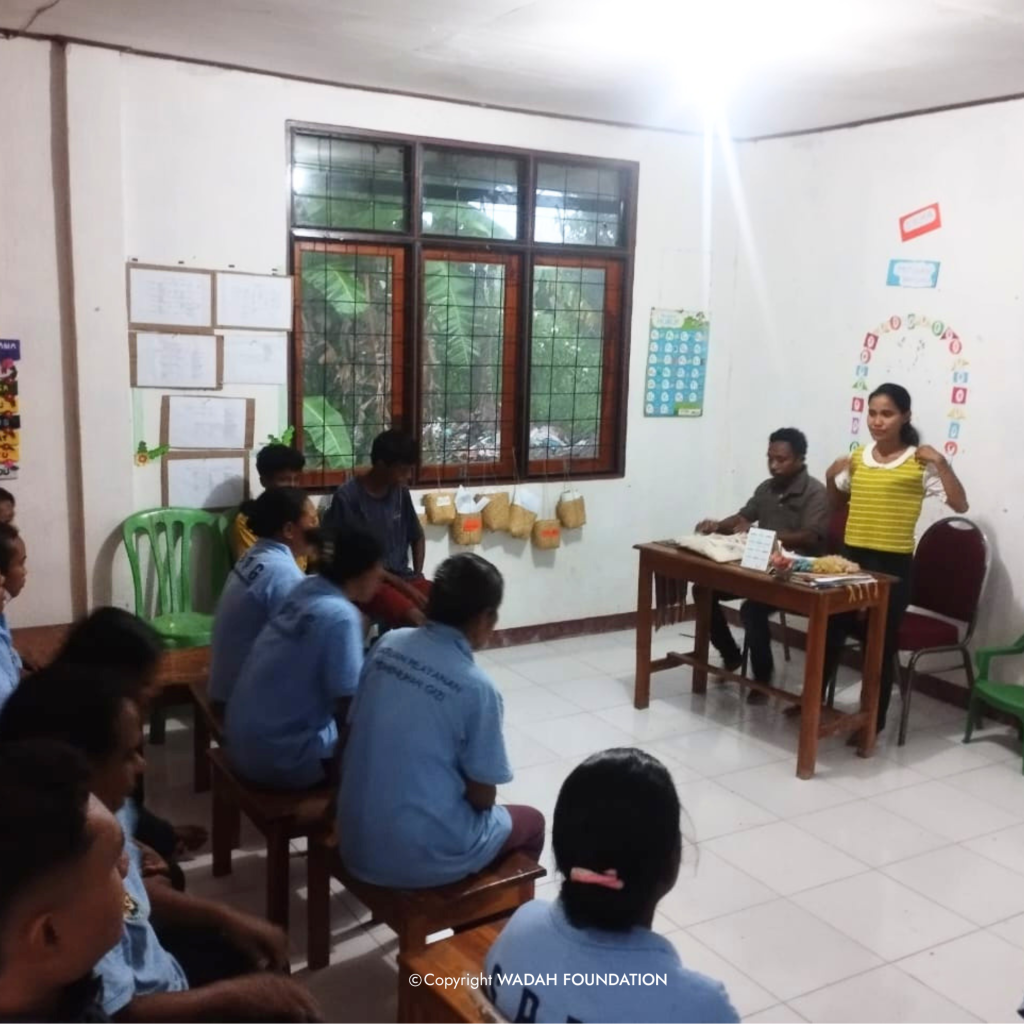
Activities at the Atambua Community Learning Centre attended by volunteers from the nutrition kitchen
This is not an exception. It is the picture of an ecosystem that is truly alive — when one person grows in one corner, the other corners light up as well. The economy turns. Education unfolds. The children’s nutrition is protected. Everything is woven together, and everything shapes everything else.
The quiet importance of a coordinator
Behind this ecosystem stands a figure whose role cannot be overlooked: Ibu Fatima Luan, the community coordinator. Her role goes far beyond what her formal title can hold. She is the place where many different interests are woven into one direction, the place where important decisions are weighed, and the place the community returns to when something falters. As a woman and as a mother, she shows that the strongest leadership is not the one with the loudest voice, but the one most deeply rooted in the heart of the community.
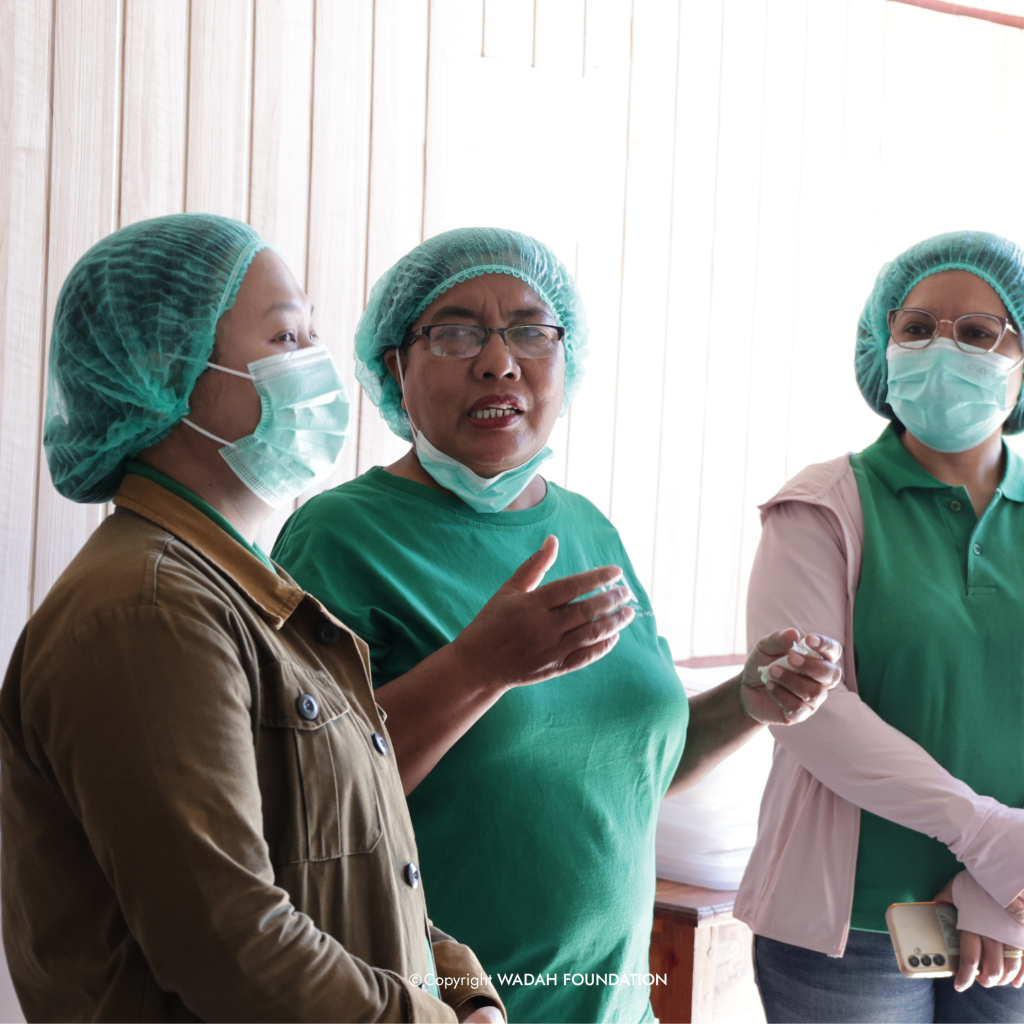
Ibu Fatima Luan
The Atambua community today is harvesting — not in a single season, and not from a single kind of crop. Each person gathers what has grown from the seed planted within them. For some, the harvest takes the shape of a more stable income. For others, it is the courage to open a book for the first time. For still others, it is the table of schoolchildren who now eat meals that nourish them.
For Yayasan Wadah, this is not the end of a program. It is proof that sincere and consistent accompaniment is not present to create dependence, but to ensure that every hand is able to hold its own future — with strength, and with dignity.
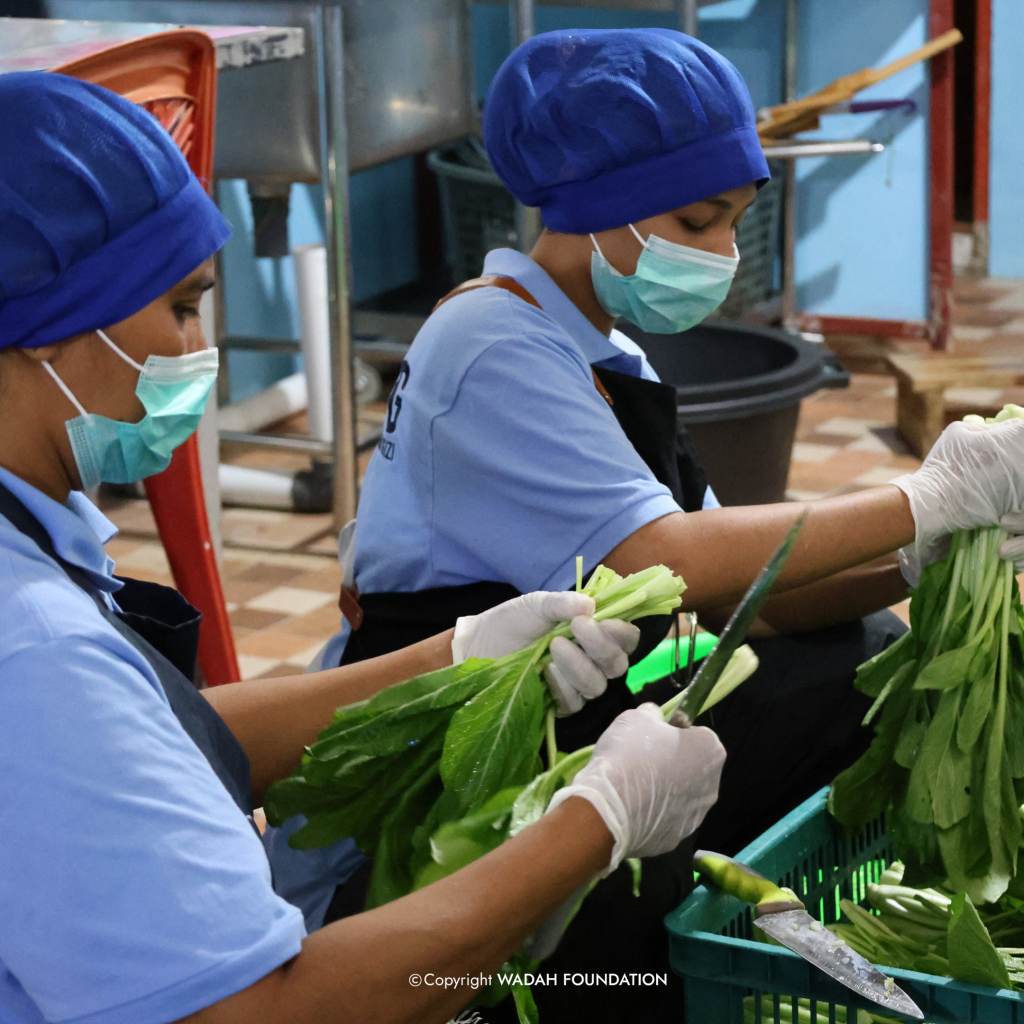
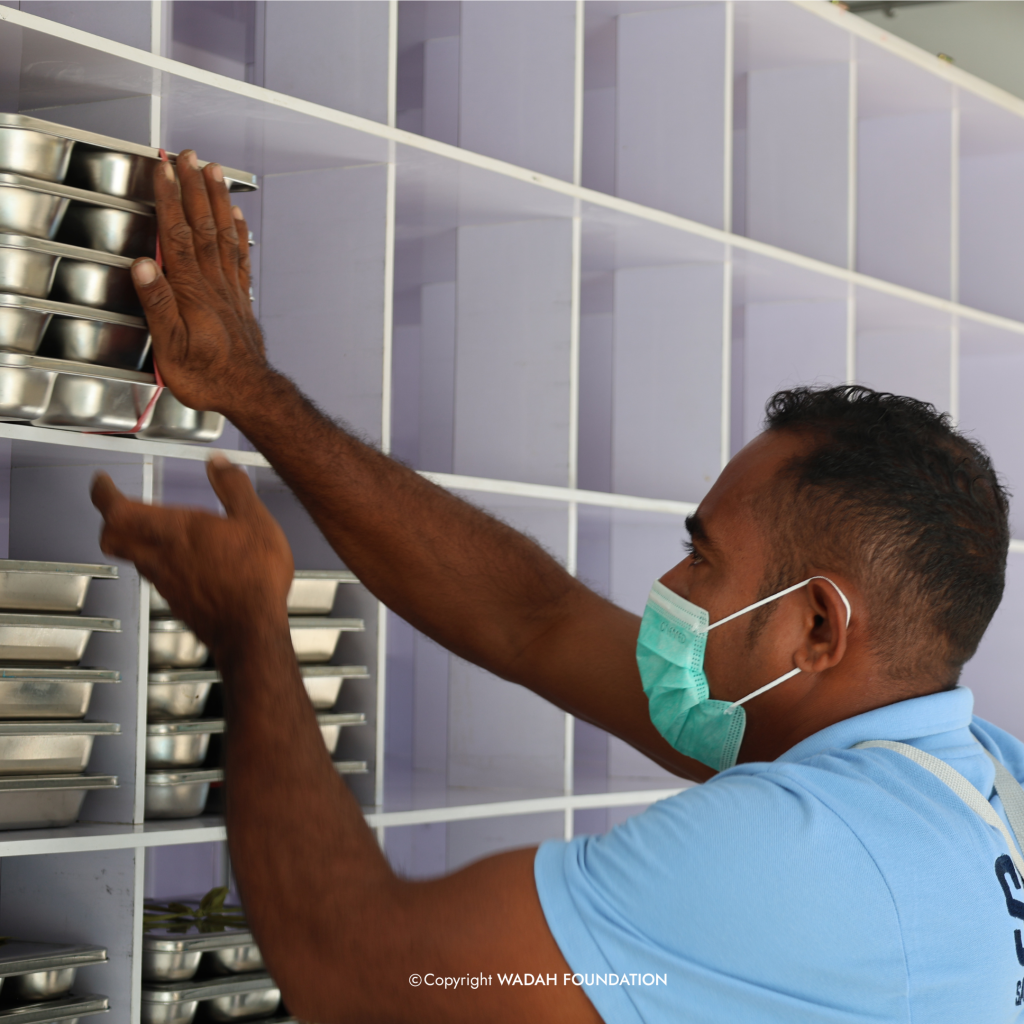
Preparatory activities in the Knaha Moriz Nutrition Kitchen
From Atambua we learn that real change does not happen overnight. It happens through stages and through processes: in small kitchens, on modest farms, on the benches of evening classes, and in the quiet decision of a mother who chooses to keep going, and to keep leading. From there, an ecosystem is born — not by miracle, but by faithfulness to the process.
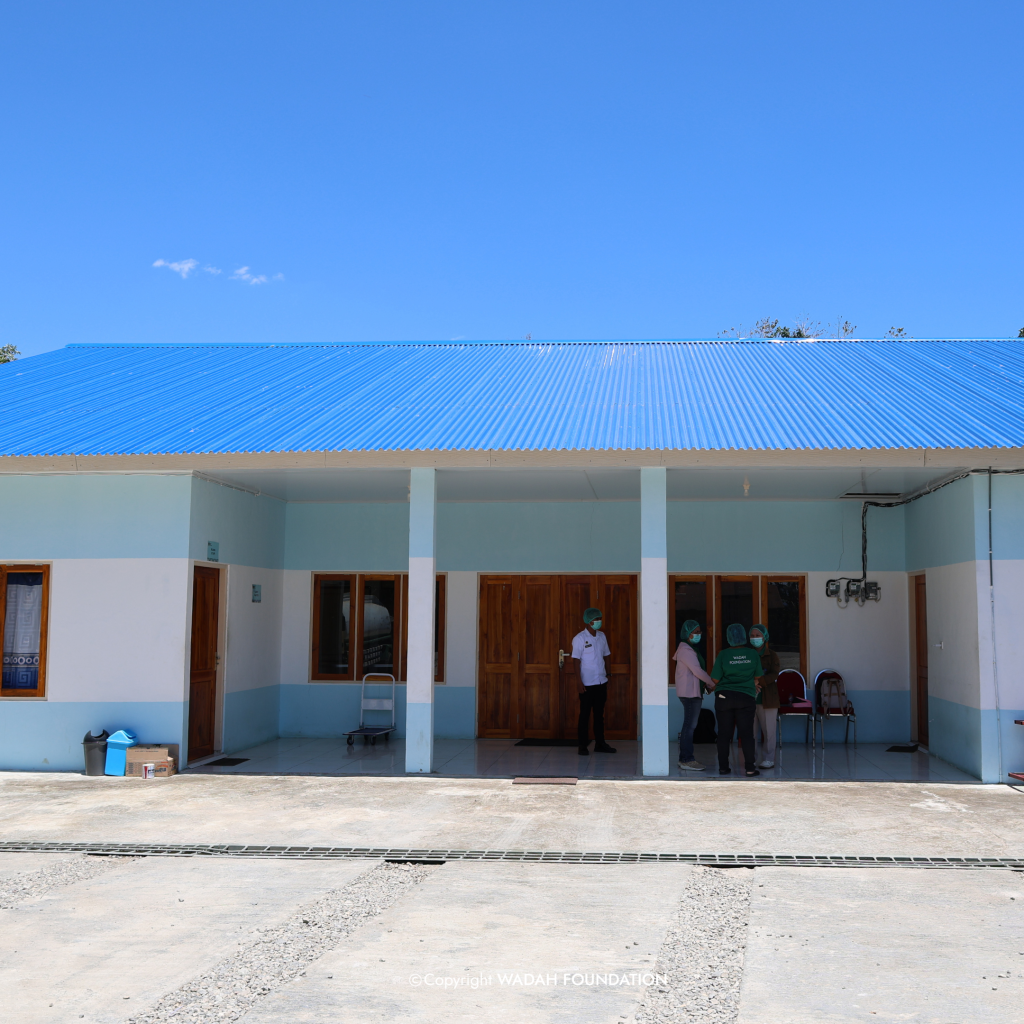
Knaha Moris Nutrition Kitchen
Author: Ani Widyastutik
Editor: Zul Herman