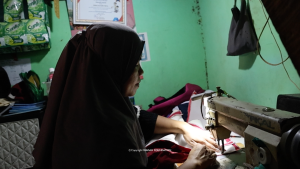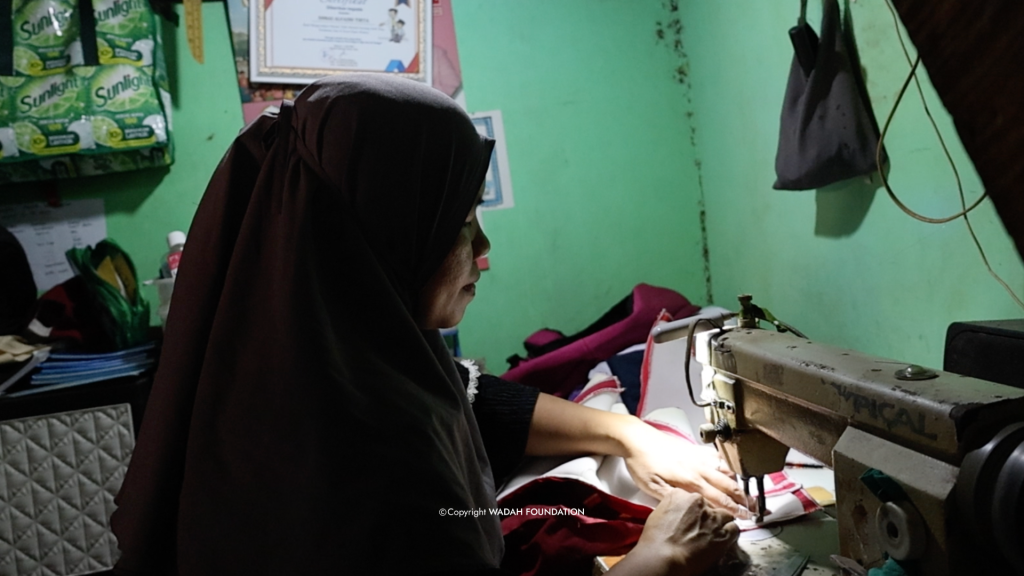
Siti Uripah is sewing an order
For Siti Uripah, the hum of the sewing machine in her home in RW 19, Kampung Beting, North Jakarta, carries a very practical meaning: it helps to cover her children’s school fees. She now serves around 50 regular customers every month and has on several occasions had to turn down orders because she cannot keep up with the demand. The same sound can be heard from the homes of other tailors across Kampung Beting, the result of community economic empowerment support provided by the Wadah Titian Harapan Foundation (Wadah) for the past nine years.
The tailors supported by Wadah no longer wait for step-by-step instructions from their mentors. The most significant change lies in how they view themselves: from aid recipients to business owners who calculate their own costs and select their own orders. Even so, this self-reliance is not yet uniform; each tailor is at a different stage.
It is this shift in perspective, from “aid recipients” to “business owners”, that has enabled the Kampung Beting Sewing Group to the status of a partner in the Wadah Titian Harapan Cooperative. Wadah’s role has shifted in turn, from full mentor to equal partner. The tailors now have a voice of their own and decide for themselves which orders to accept.
Nine Years of Mentoring
Wadah’s mentoring of the group of tailors in Kampung Beting began in 2017. The objective from the outset was to establish a sewing business capable of operating on its own. The support was practical: in the form of sewing machines, training in sewing skills, training in financial management, and digital literacy to expand access to online markets.
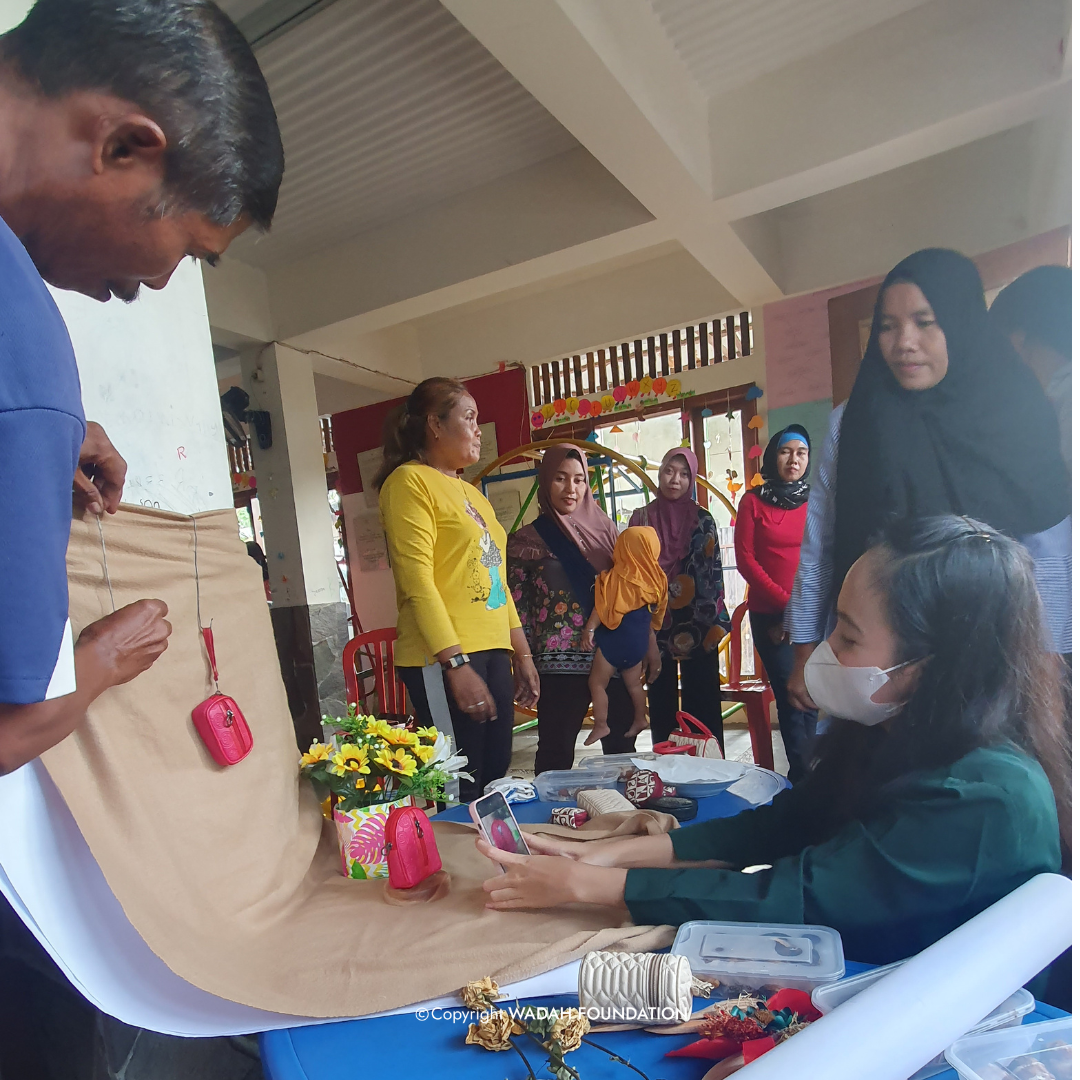
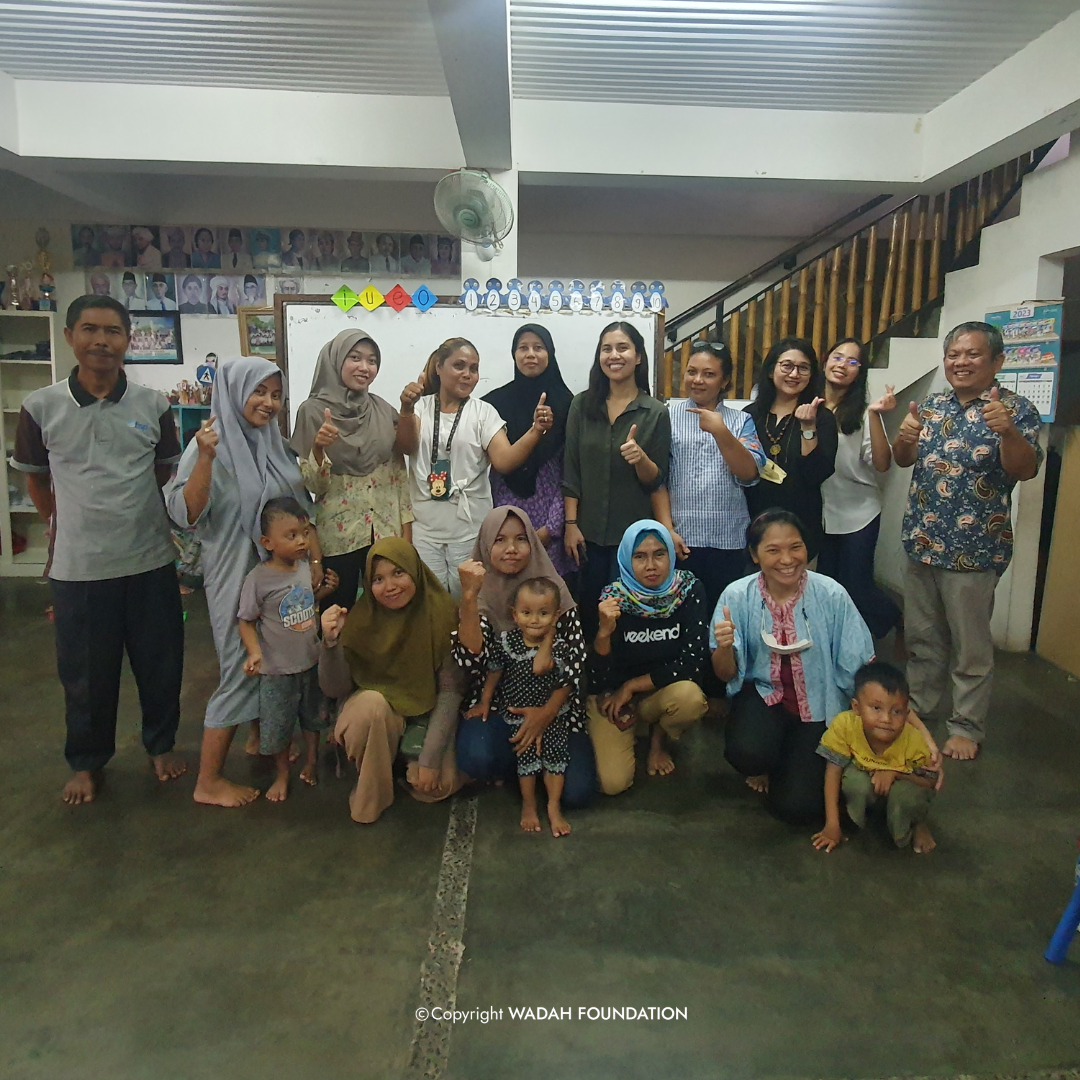
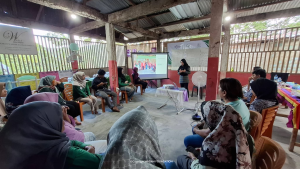
A training course attended by tailors from Kampung Beting
The mentoring has been kept up consistently. At least once a month, the Wadah team visits in person to see how each business is doing and to find swift solutions to the challenges they face.
The results are evident in the range of products. Whereas the group once accepted only basic sewing orders, it now produces five lines: chair cushion covers, tote bags, table runners, coasters and tennis bags. Some of these are already sold in addition to the regular orders the group receives.
Three Tailors, Three Stages
The group’s progress is most clearly seen in the achievements of each tailor. Siti Uripah, for example, now has to turn down some orders from PT Retota Sakti (Retota) because the alteration work from her neighbours exceeds her capacity. Retota is a manufacturer and exporter of natural-fibre woven fabrics, which has long placed orders with the Kampung Beting sewing group.
Since receiving support from Wadah, Uripah’s income from sewing has almost doubled. She now has 50 regular customers each month, and her reach now extends from her home in RW 19 into neighbouring RWs.
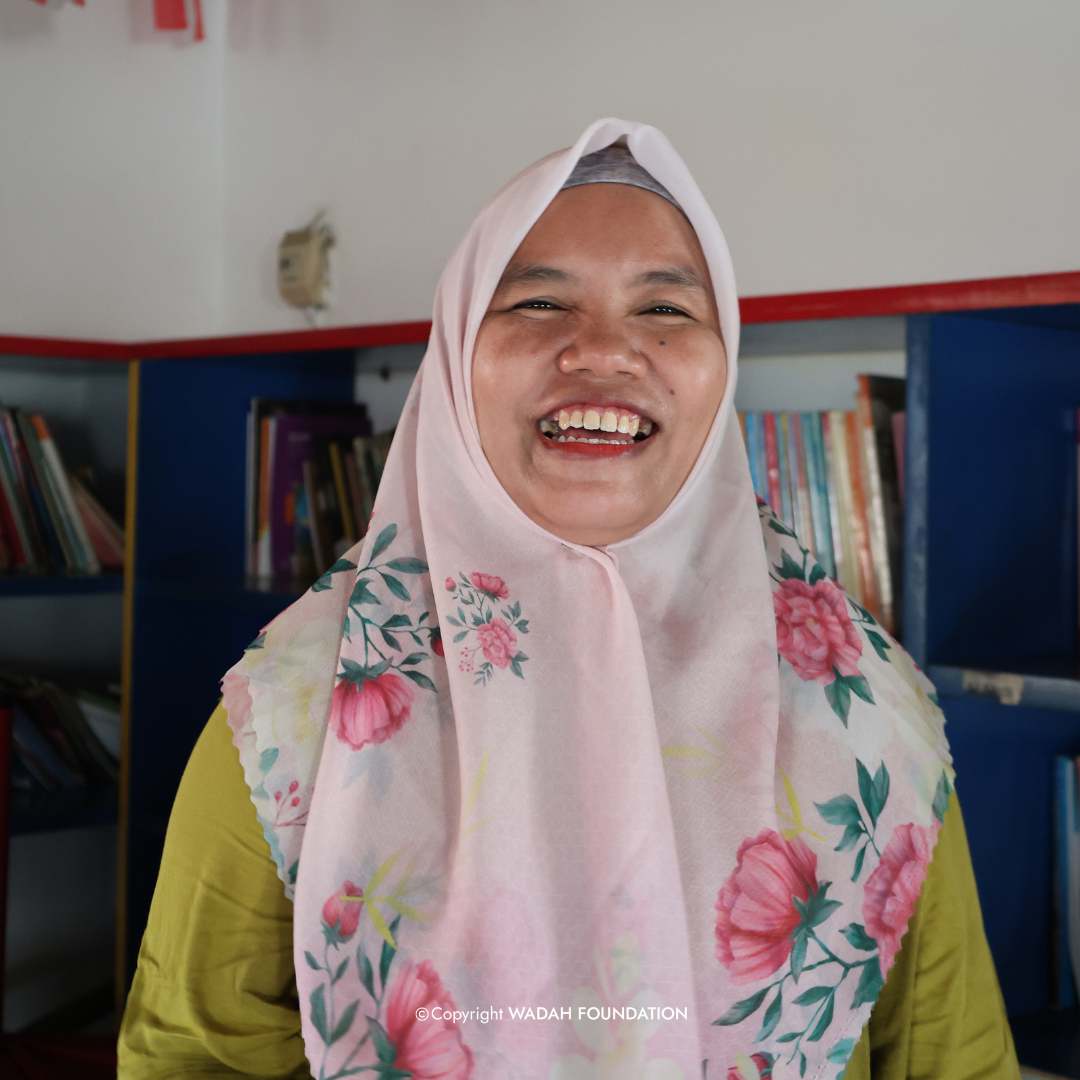
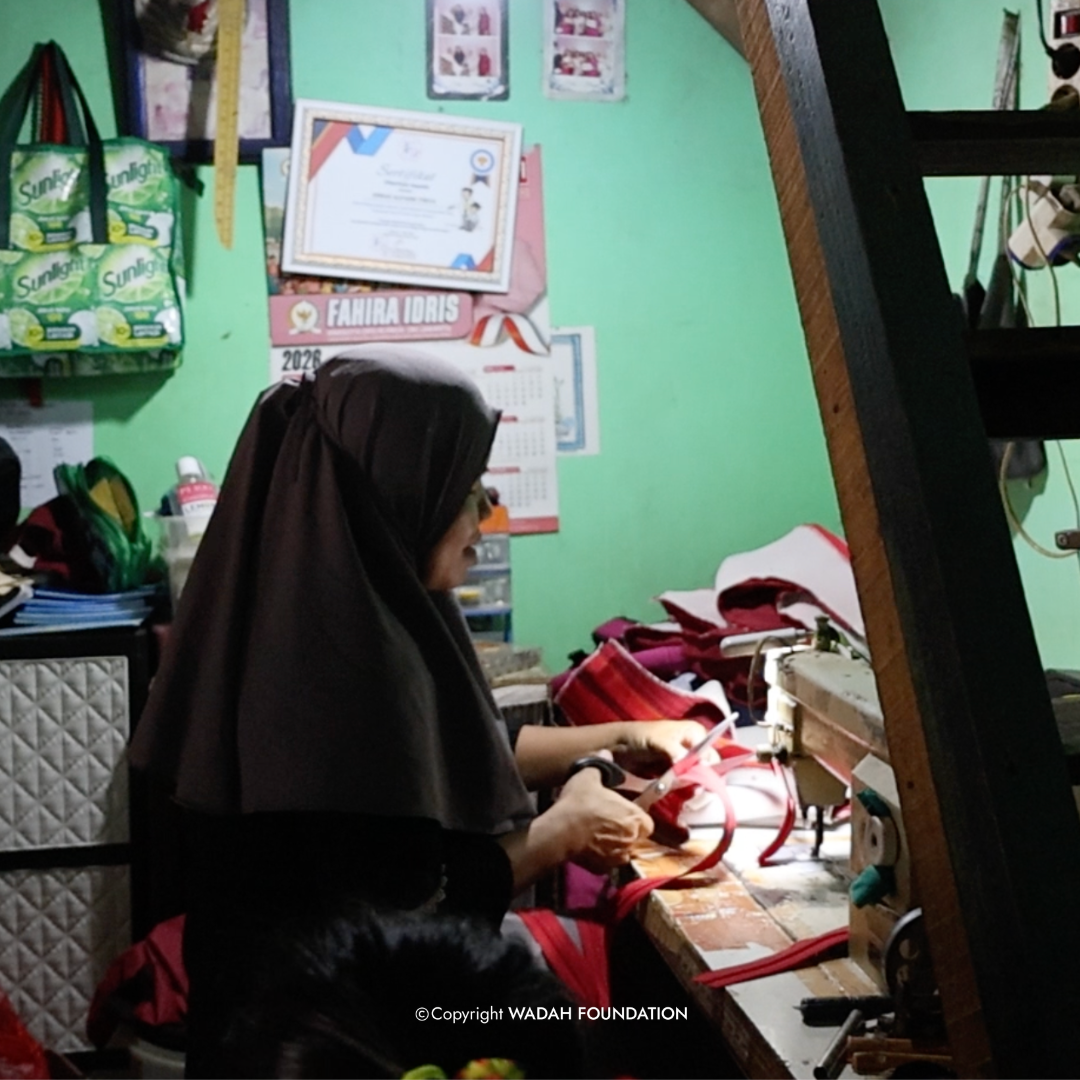
Siti Uripah
Uripah’s skills have also developed beyond altering clothes. She is able to produce specialised items such as covers for the meal-tray trolleys at the SPPG Koja nutrition kitchen in Kampung Beting.
“The change has been very noticeable, particularly in helping to cover my children’s education costs. I’ve now started my own alteration service alongside my regular orders. In fact, I’ve even had to turn down orders from Retota on several occasions because I’ve had so many alterations to do for neighbours,” said Uripah.
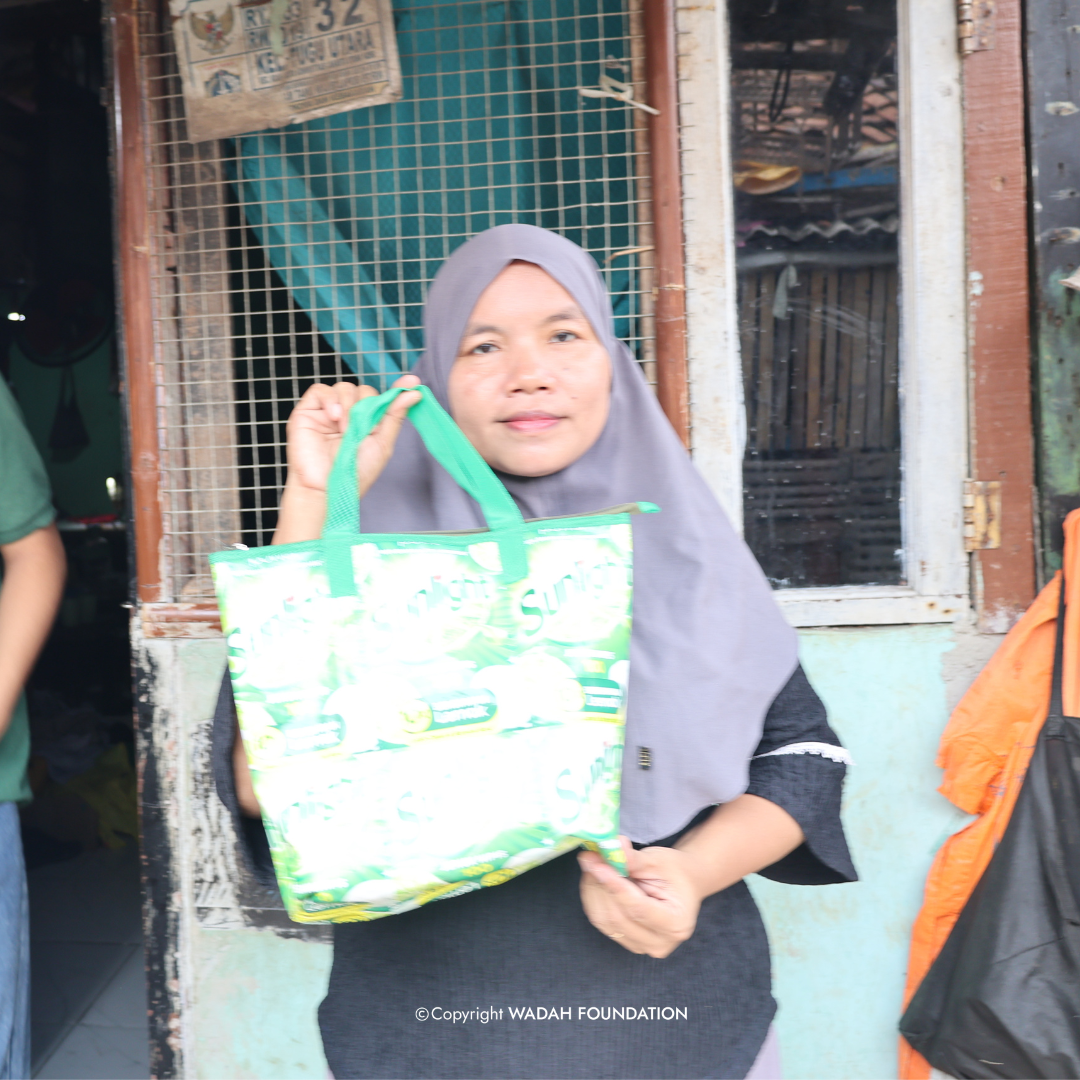
Siti Uripah and her sewing work
Meanwhile, Een, another tailor from Kampung Beting who specialises in coasters and bags, records an average monthly turnover of Rp1 million.
Her productivity is relatively high; she can complete no fewer than 300 coasters in just three days. A typical Retota order, however, comes to only 200 pieces and the rest of her work comes from occasional buyers. Unlike Uripah, Een still relies on a single customer for most of her income. It is here that continued mentoring is needed.
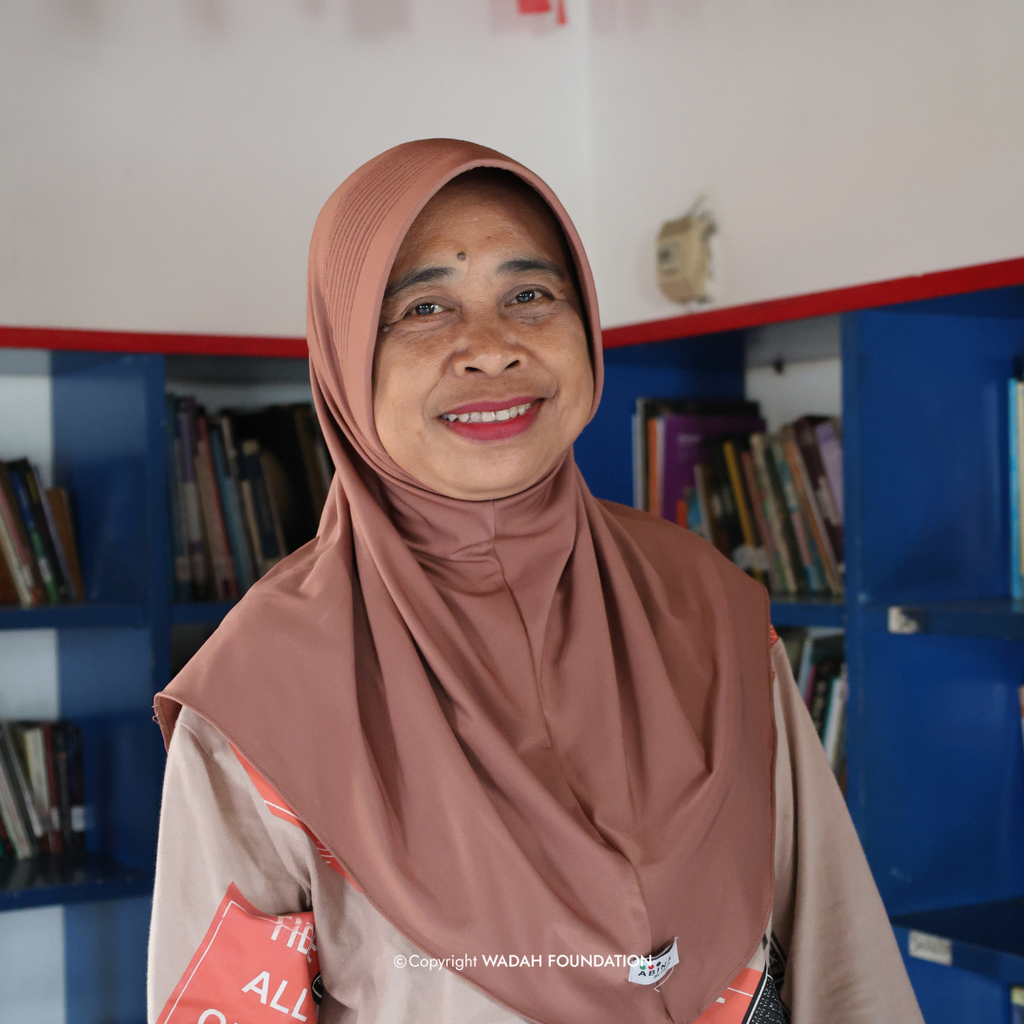
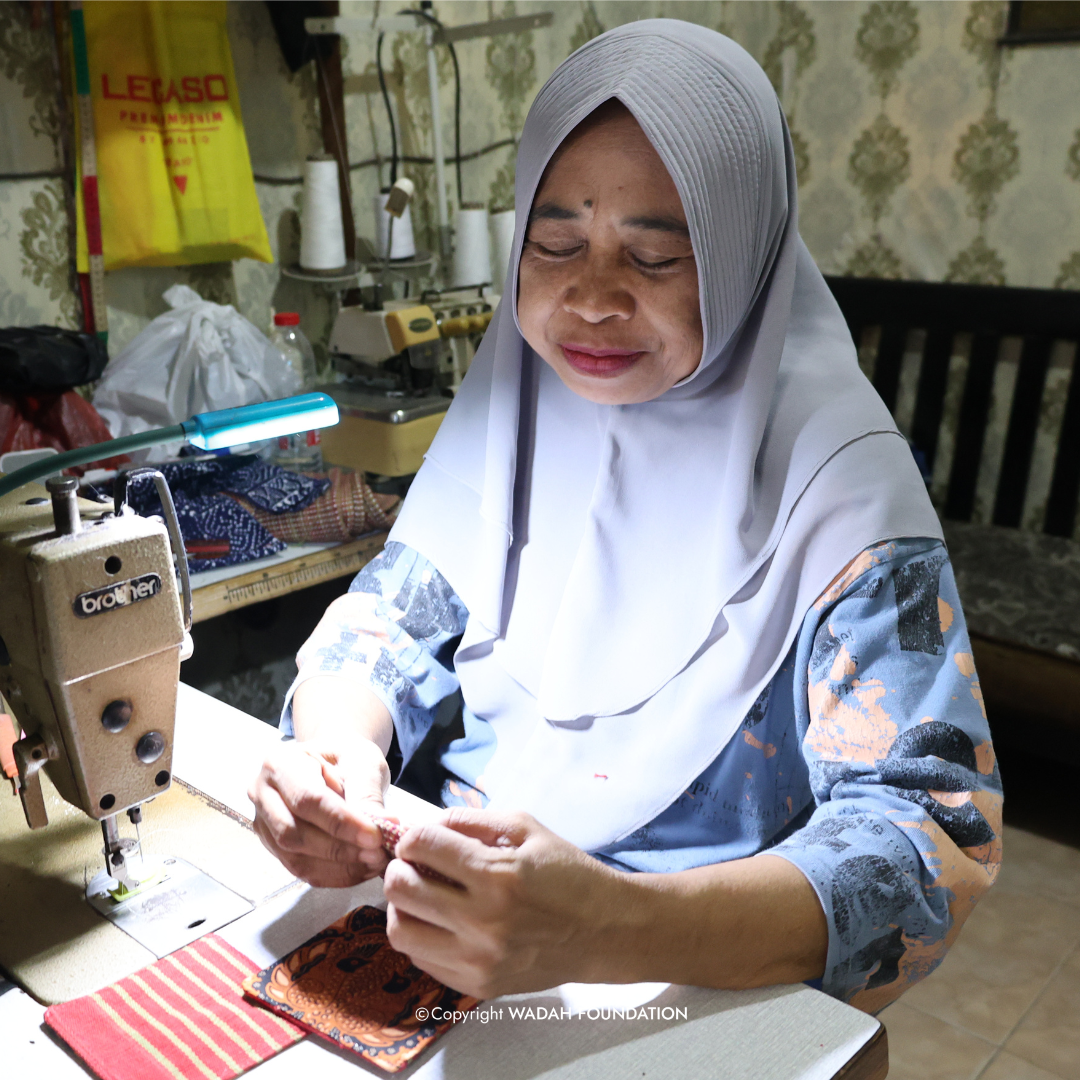
Een
“I am so grateful to have come to know Wadah, which introduced me to Retota. It is thanks to Wadah’s help that I am able to earn an income from sewing. My main income comes from Retota’s orders. I hope that Wadah can continue to support us,” said Een.
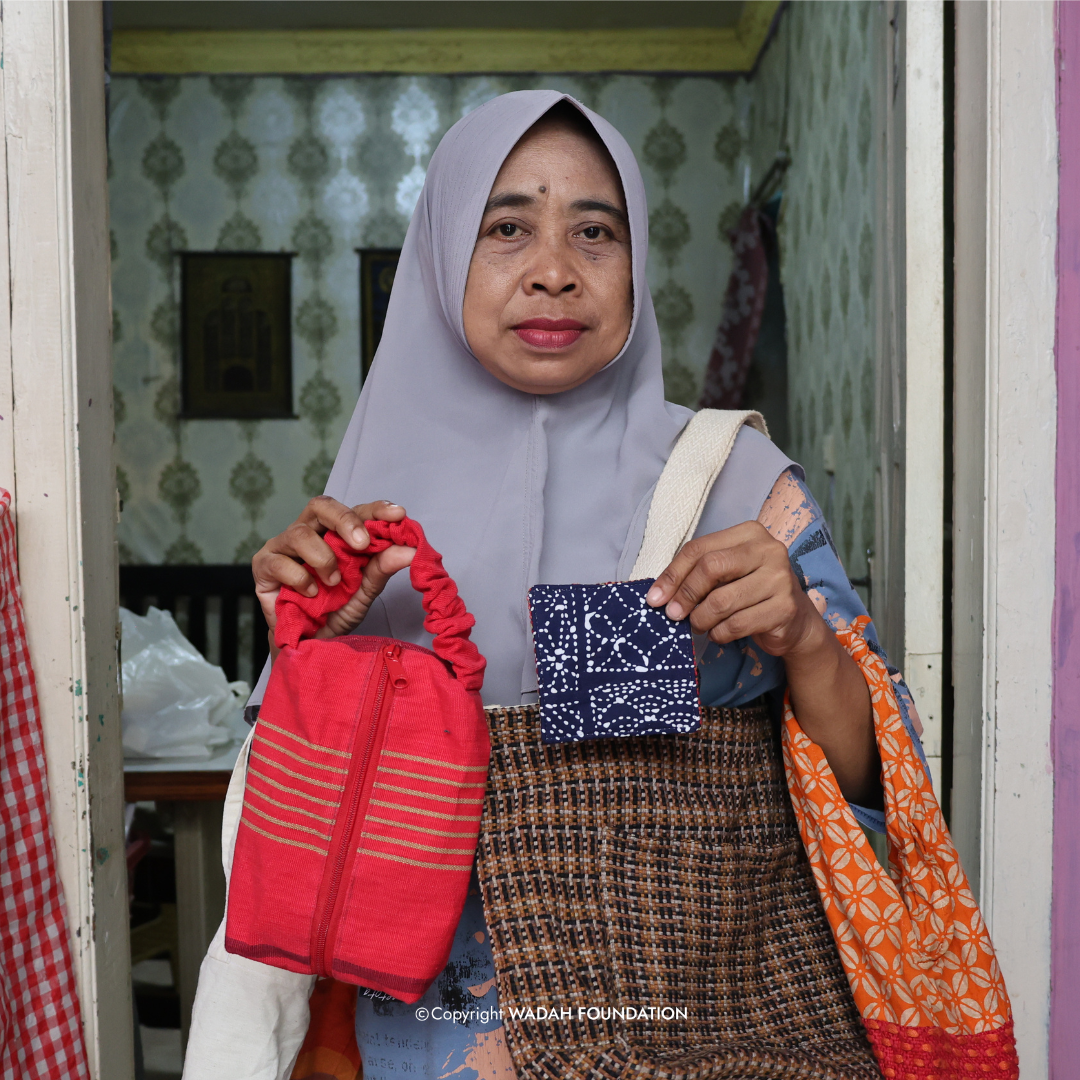
Een and her sewing work
The third tailor, Tony, began sewing as a side business alongside his main job. Through orders from PT Sinergi Titian Harapan, he was entrusted with producing tote bags for Celebration of Life, Wadah’s annual event. Together with his wife, Susi, who had taken up sewing before him, he is now able to produce around 200 bags per month.
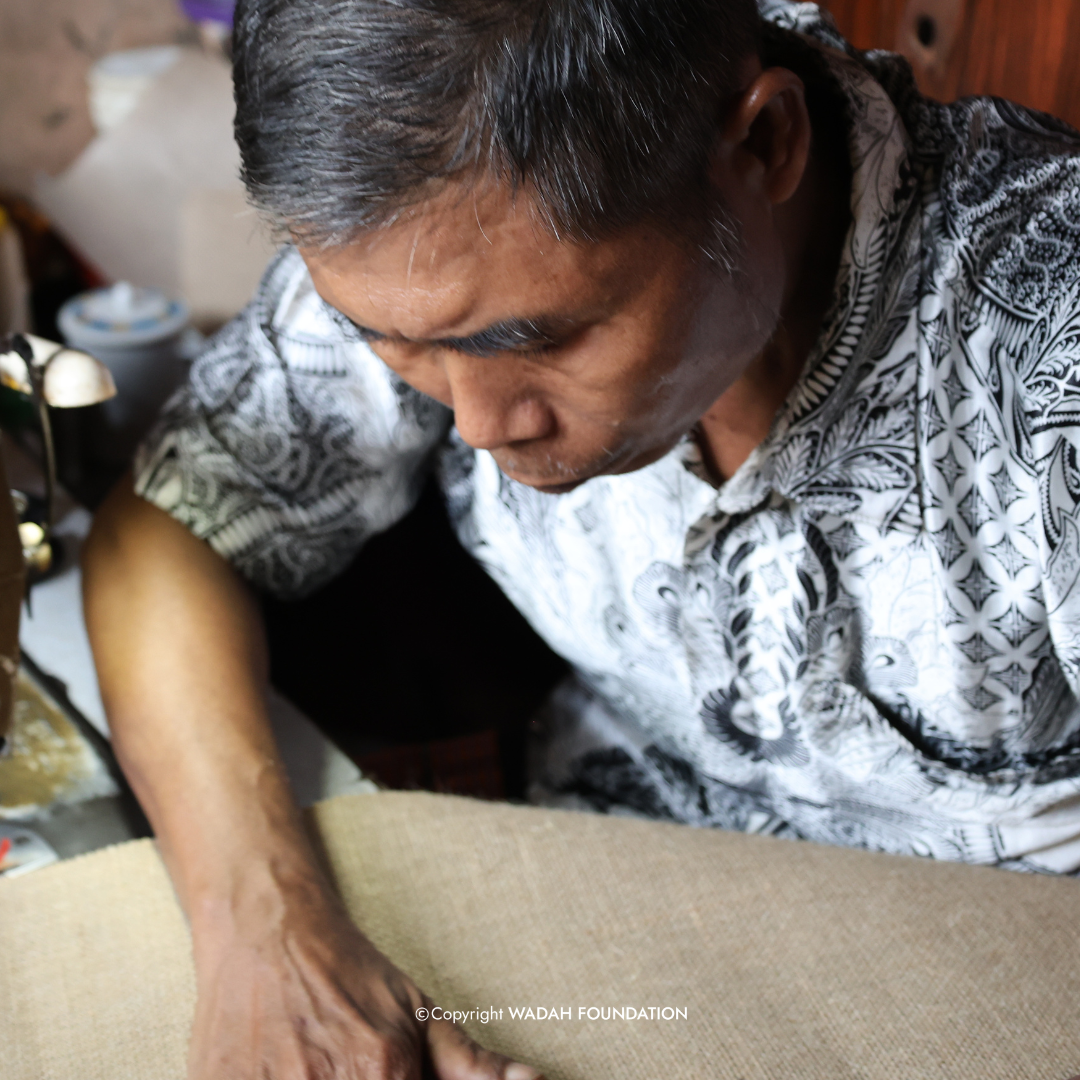
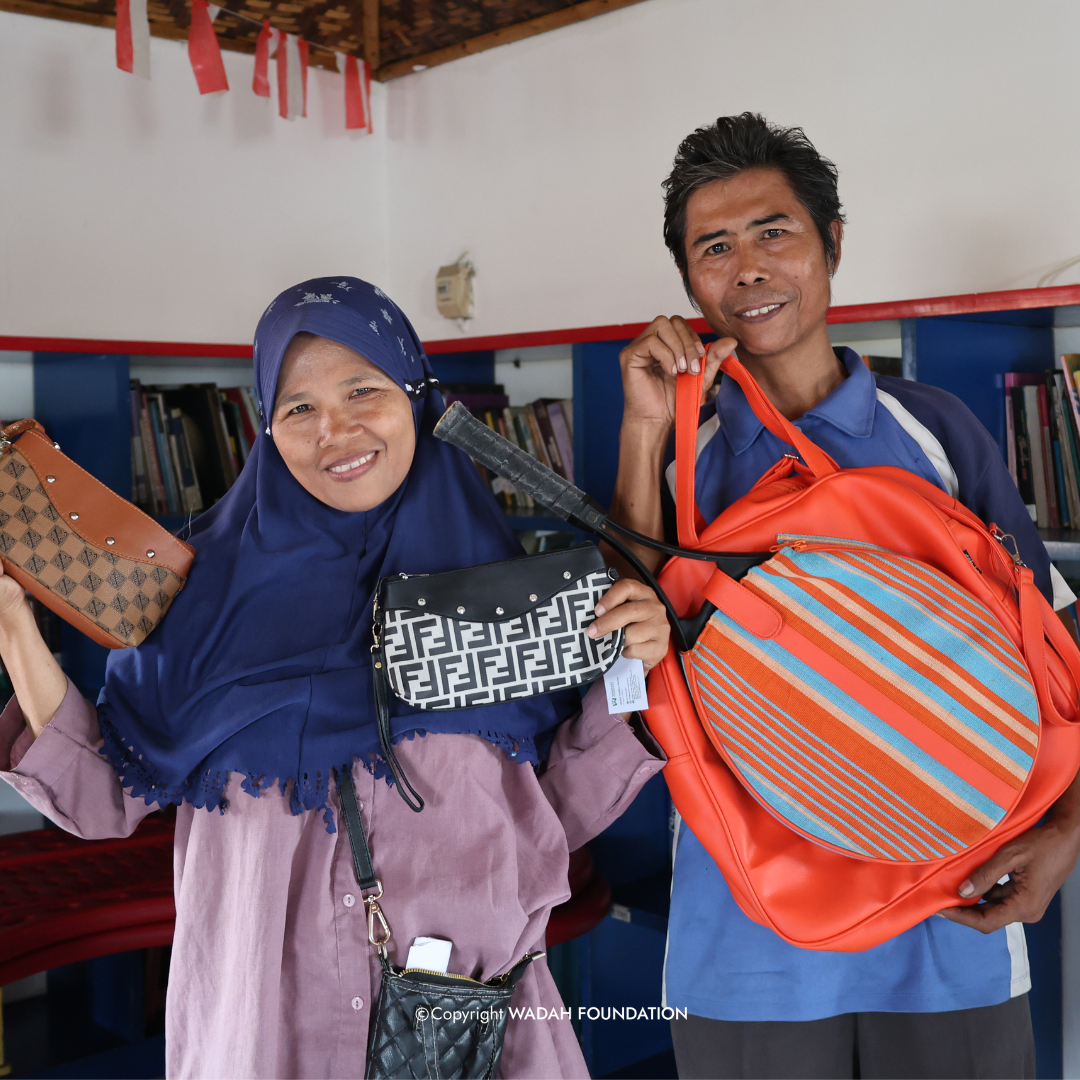
Tony with his wife Susi
Persevering Despite Constraints
Constraints remain a real challenge, particularly access to equipment and a supply of raw materials that is not yet entirely reliable. The Kampung Beting tailors deal with this by taking turns on the machines and rearranging their production schedules to ensure every order is completed on time.
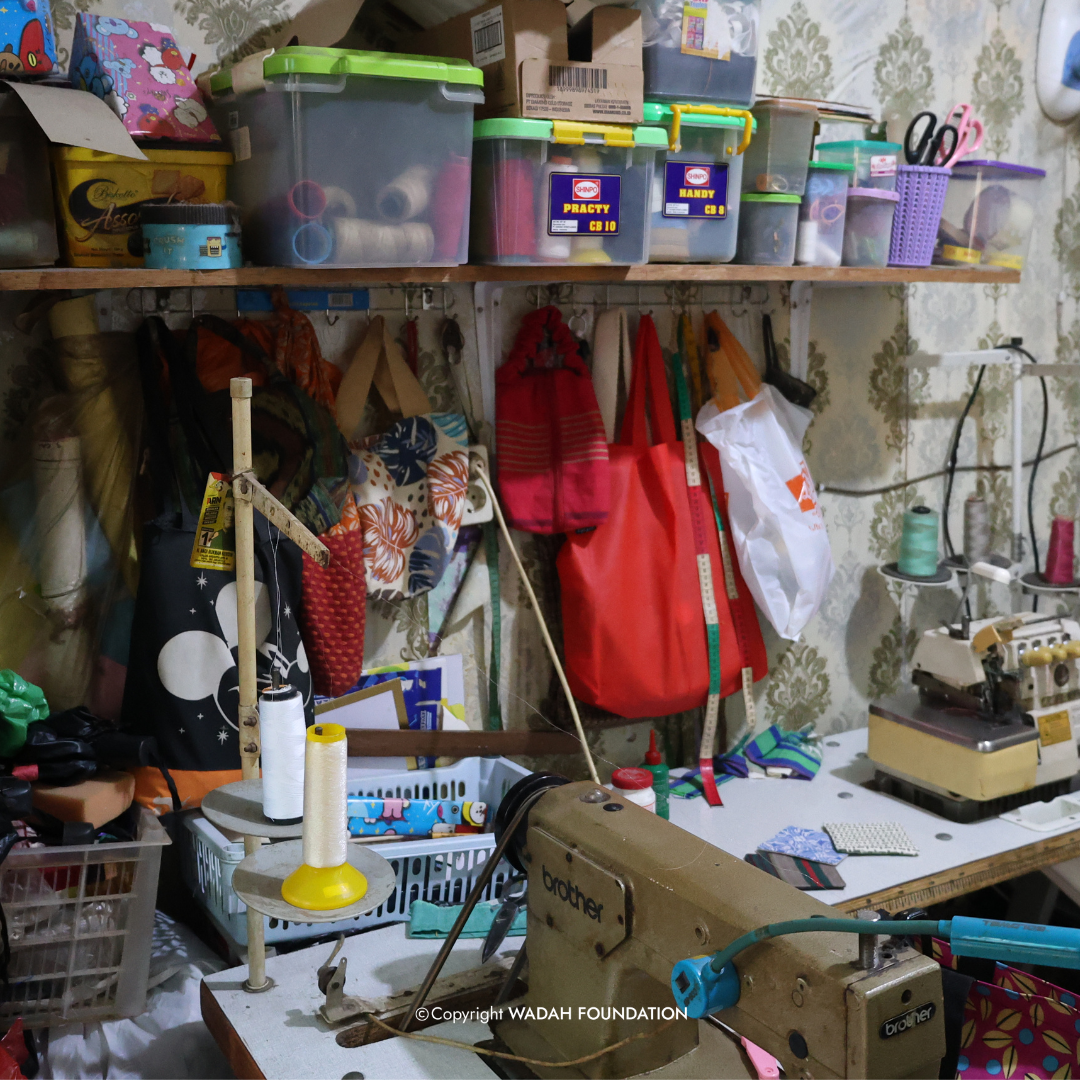
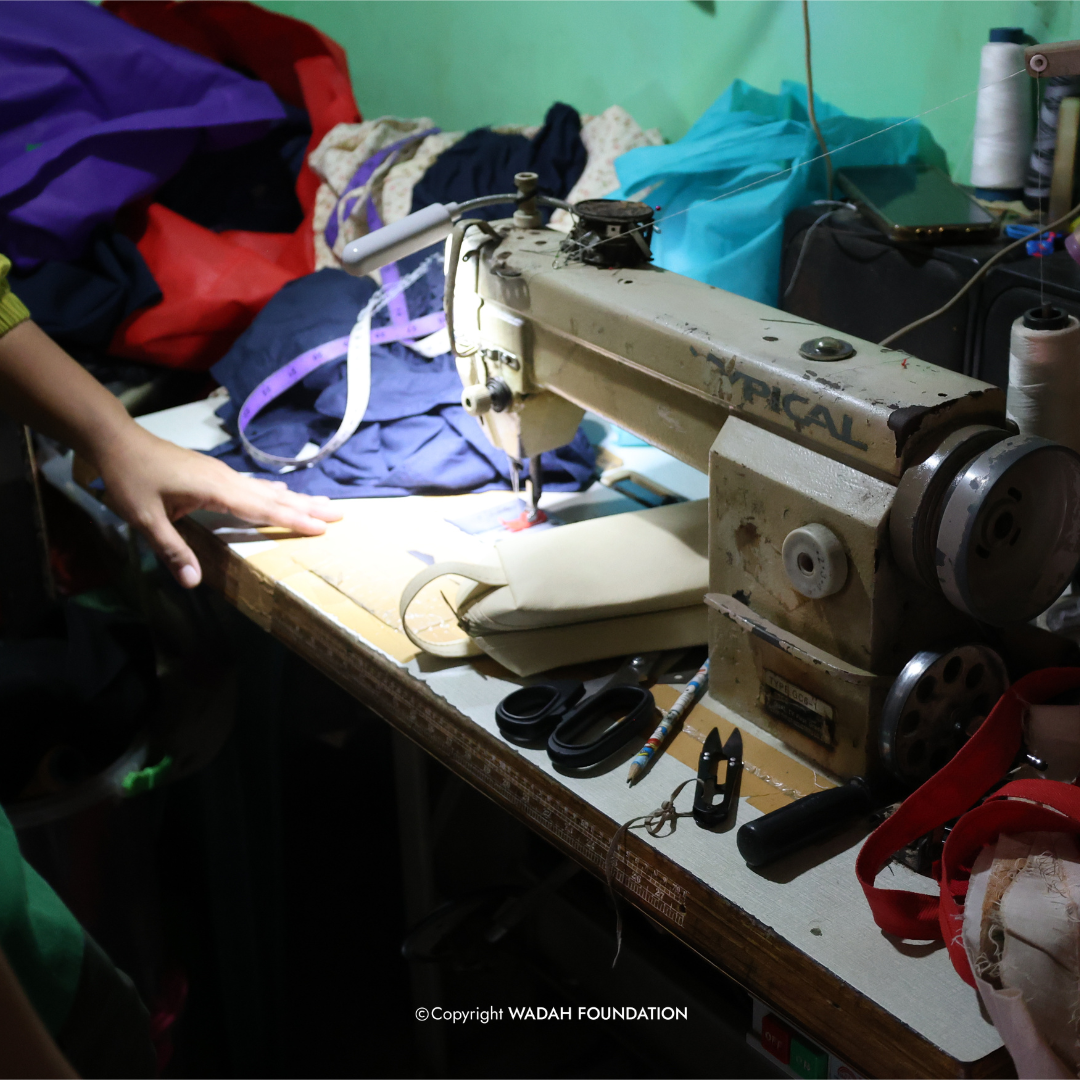
Sewing equipment and raw materials
As the sewing machines are shared amongst the group, orders tend to pile up on a single machine, whilst the demand reaching Uripah already exceeds her own capacity. The group requires additional sewing equipment to better meet the demand, so that incoming orders no longer have to be turned down due to a lack of equipment. Wadah is now exploring further support to meet these needs.
A New Generation and a Wider Market
Looking ahead, Tony and Susi plan to create job opportunities for local people and to establish their own brand, KarSen, short for Karya Sendiri (Our Own Work). Tony hopes that Wadah will continue to support them until the brand is fully established.
The group also plans to expand its network of buyers beyond Retota and to pass its sewing skills on to younger people, so that the skills and income built up over the past nine years carry into the next generation.
What Has Grown Over Nine Years
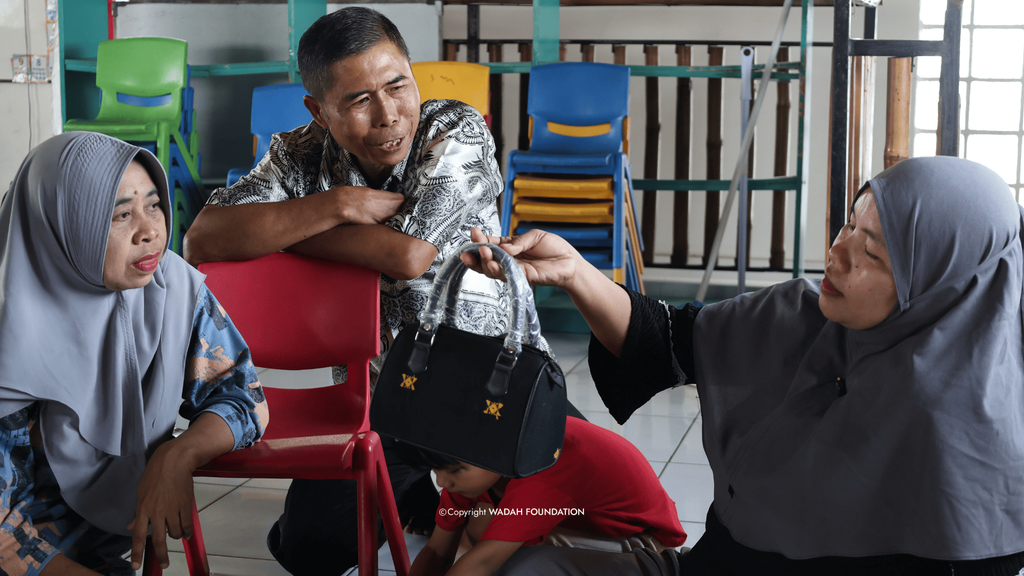
Een, Toni, & Siti Uripah
Nine years of mentoring in Kampung Beting have demonstrated a fairly simple truth. When skills are honed and market access is opened up, family incomes rise, and that is the impact that community members feel most directly.
Uripah measures this by the fact that her children’s school fees are now covered. The next task is already in sight: ensuring the group’s orders no longer depend on a single buyer, and that these skills pass into the hands of the generation coming after.
Author: Afida Nurul Hilma
Editor: Zul Herman, Aurora Nurhidayah